

By John Gordon, in partnership with Uncertainty Experts
Six tools evaluated. Three webinars attended. Someone built a comparison spreadsheet with 47 rows and a scoring system nobody agreed on.
It felt productive. It was not.
This is Fog: the second behavioural state identified through Uncertainty Experts' research with UCL. Article 3 dealt with Fear, the state that stops teams from starting. Fog is worse. Teams in Fog are not resisting. They are trying. That is what makes it so difficult to diagnose. The volume of information is preventing progress, not producing it. And the people caught in it genuinely believe they are making headway.
The numbers behind the overwhelm
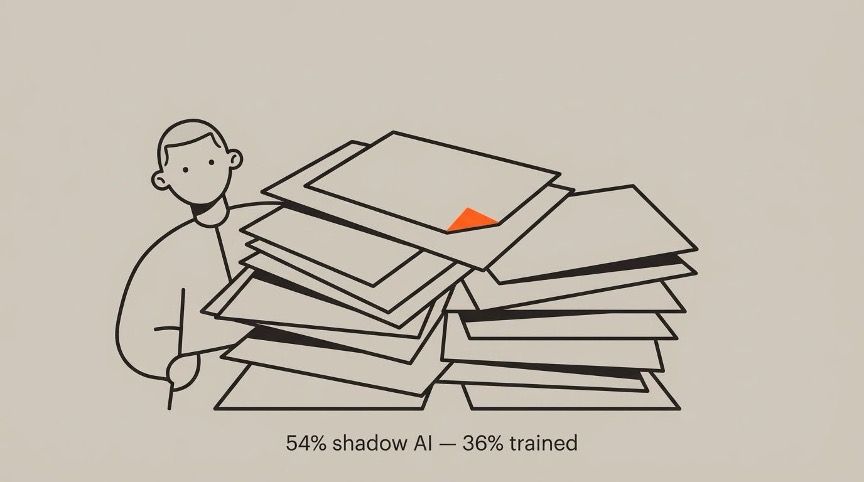
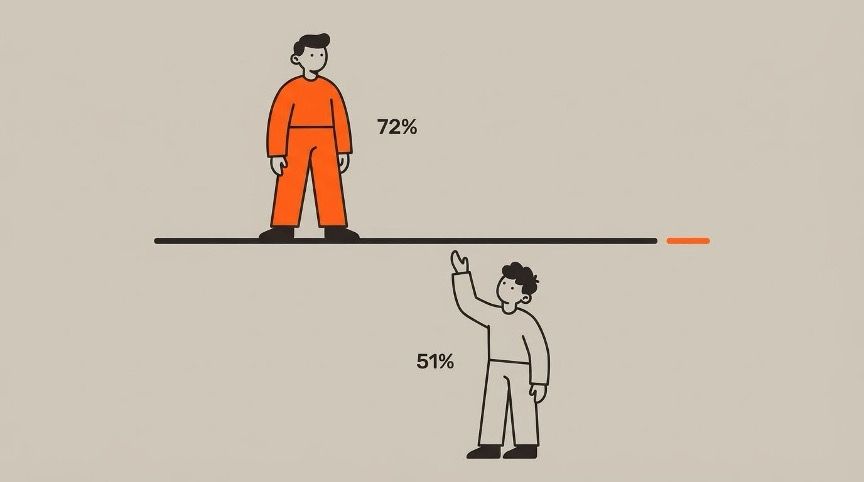
BCG's AI at Work report revealed a "silicon ceiling." 72% of leaders reported confident AI adoption. Only 51% of frontline staff agreed. The same report found 54% using unapproved AI tools, while only 36% had received any training.
The Federal Reserve measured adoption jumping from 30% to 46% in six months. Any evaluation conducted three months ago is already outdated. The WEF projects 39% of skills obsolete by 2030. Which 39%? Nobody knows.
Synthesia found only 22% of L&D teams have a clear AI plan. 29% said they need to "learn more before deciding." Learning more is the signature Fog behaviour. It feels responsible. It delays action indefinitely.
Three types of paralysis, each disguised as progress
Decision paralysis looks like thorough evaluation. Seven tools reviewed, two proofs of concept, a recommendation document that recommends further evaluation. Six months pass. Nothing changes.
Analysis paralysis looks like due diligence. A risk assessment identifies 14 concerns. Each generates a sub-workstream. The sub-workstreams produce reports identifying additional concerns. The concerns multiply. The capability does not.
Options paralysis looks like strategic thinking. "We could start with content creation, or assessment design, or data analysis..." The conversation cycles. Nobody commits. The menu of possibilities becomes a substitute for choosing.
95% of AI pilots fail, according to MIT's research on the GenAI divide. The most common reason is disconnection from a broader framework. A pilot without a skills architecture is an experiment without a hypothesis.
PwC's Global CEO Survey found 56% of CEOs report no measurable value from AI investments. The NBER found 89% of firms report no productivity impact. These are not organisations that did nothing. These are organisations that did everything except build structured capability. They bought tools, ran pilots, attended conferences, and produced strategy documents. Fog activity, all of it.
What uncertainty does to judgement
Uncertainty Experts' research with UCL explains why Fog is so difficult to escape. The brain is a prediction engine. When data is incomplete, it fills gaps with assumptions from past experience. For L&D professionals evaluating AI, the brain pattern-matches against previous technology adoptions, many of which moved more slowly.
Safety behaviours in Fog look different from Fear. Where Fear produces avoidance, Fog produces over-activity. The twelfth webinar provides the sensation of learning without the risk of committing. The spreadsheet provides the sensation of analysis without the discomfort of a decision.
Research by Sheeran found that roughly half of people who agree to take action in uncertain conditions fail to follow through. The gap between intention and action is where Fog lives.
Conviction Narrative Theory, developed by Johnson, Bilovich, and Tuckett at UCL and published in Behavioral and Brain Sciences, adds another layer. People construct narratives about uncertain futures that carry the emotional weight of real memories. A team imagining a failed AI rollout experiences the failure emotionally, now. The evaluation cycle becomes self-protective: as long as we are still evaluating, the failure has not happened yet.
What dissolves Fog
Not more information. Framework.
A framework tells you which skills exist, not which tools. It tells you which skills matter for your role. And it gives you an order: start here, then here, then here.
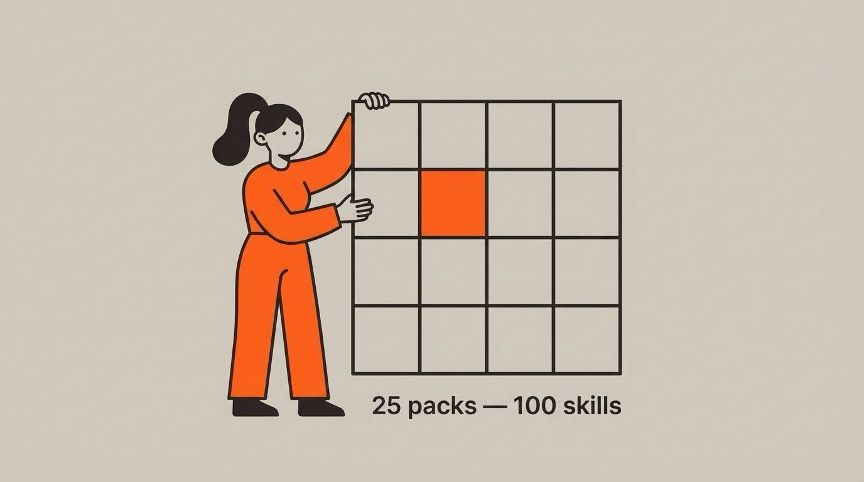
SFIA 9 provides the vocabulary: 147 skills, seven levels, nearly 200 countries. AI Skill Packs provide the practical unit: 25 packs, 100 skills, each mapped to SFIA 9. The MCP convergence from Article 2 reinforces this: tools are standardising around a common protocol. The argument for another quarter of evaluation is weakening by the month.
The Federal Reserve data tells the story: adoption jumped from 30% to 46% in six months. Organisations that spent those six months evaluating are now further behind than when they started. The tools moved. The teams did not.
If your team is in Fog, the prescription is counterintuitive: stop researching. Pick one AI Skill Pack. Give it to one team. Set a four-week window. Measure what changes. The framework exists. The vocabulary exists. The only thing missing is a decision to start.
Article 5 looks at the most expensive state of all: what happens when teams move past both Fear and Fog, agree that action is needed, and then do nothing anyway. That is Stasis.
The Finer Vision AI Maturity Assessment is free and takes 10 minutes. It cuts through Fog by telling you exactly which AI Skill Packs to start with, based on your team's current capability.
Take the free AI Maturity Assessment at finervision.com/assessment
References
1. BCG (June 2025). AI at Work 2025. 72% leaders, 51% frontline. 54% shadow AI, 36% trained.
2. Federal Reserve Vice Chair Jefferson (November 2025). AI adoption. 30% to 46%.
3. World Economic Forum (January 2025). Future of Jobs Report 2025. 39% of skills obsolete by 2030.
4. Synthesia (December 2025). 22% have a clear plan, 29% need to "learn more."
5. MIT (August 2025). GenAI Divide report. 95% of AI pilots fail to scale.
6. PwC (January 2026). 29th Global CEO Survey. 56% of CEOs no measurable value from AI.
7. National Bureau of Economic Research (February 2026). "Firm Data on AI" (w34836). 89% report no productivity impact.
8. Sheeran, P. (2002). Intention-behaviour relations. Roughly half fail to follow through.
9. Johnson, H., Bilovich, A., Tuckett, D. (2022). Conviction Narrative Theory. Behavioral and Brain Sciences, Cambridge University Press.
10. SFIA Foundation (October 2024). SFIA 9. 147 skills, 7 levels, nearly 200 countries.
11. Uncertainty Experts / UCL. Fear, Fog, Stasis behavioural patterns.